Thomas Mann and His Daughter Cross a Divided Germany
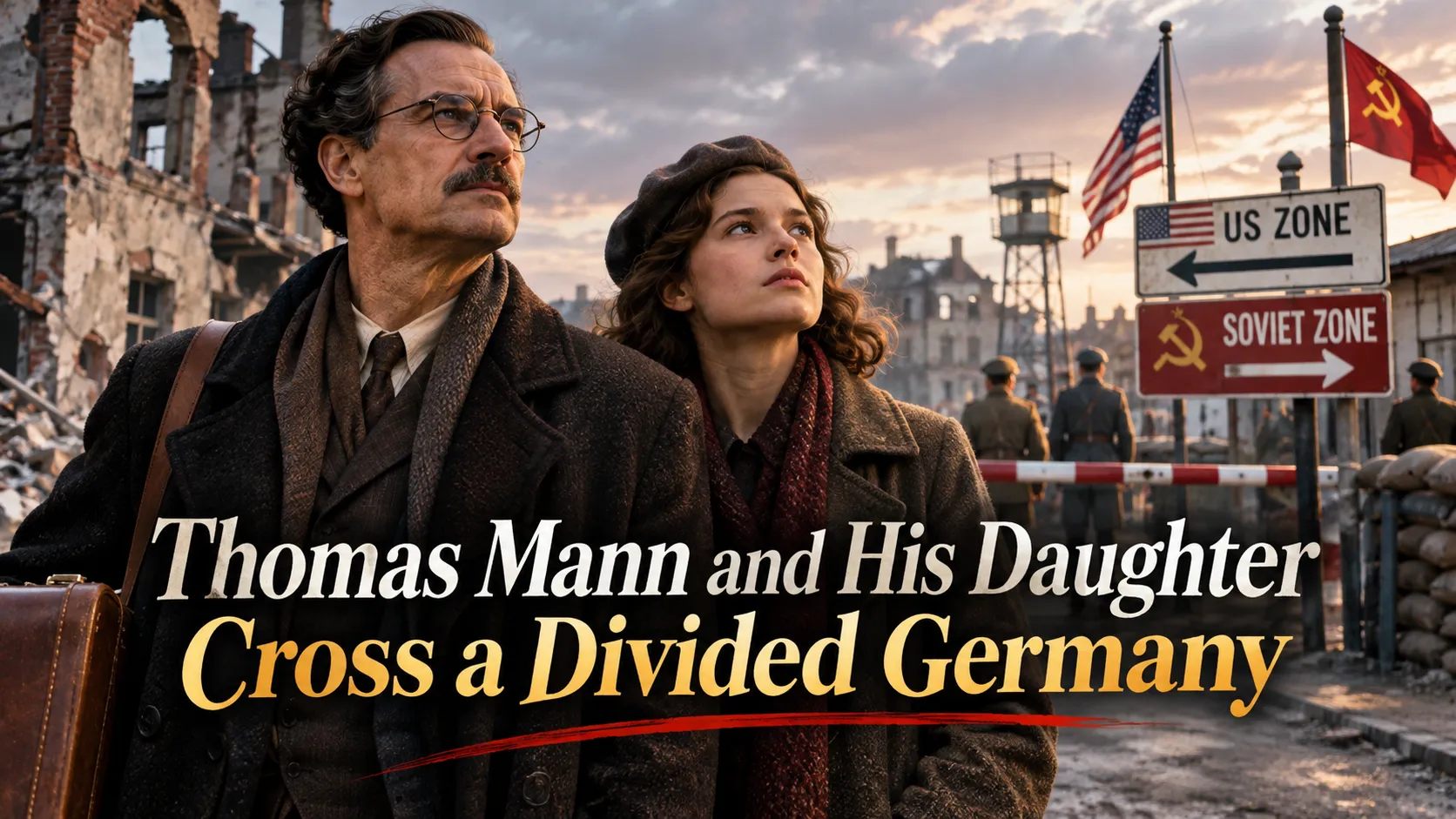
Paweł Pawlikowski’s Fatherland shows audiences a divided landscape of postwar Germany as it follows Nobel Laureate Thomas Mann and his daughter Erika on an emotionally charged journey. Fatherland is a 2026 release and takes place over one summer in the same year, the summer of reunification. The political situation allows Mann to confront the trauma of going into exile and the problems he has with his family.
The 82 minute movie was directed by Pawlikowski and has Hanns Zischler as Mann and Sandra Hüller as Erika, with Mann and Erika driving through a post-world war 2 Europe that is still trying to rebuild.
The movie is very personal and shows families being reunited after a long time apart while also looking at the tensions and uncertainties of the early years of the Cold War. Unlike many war movies that focus on the direct participants of the conflict, this movie focuses on what happens to the people that return to a country that has changed beyond all recognition.
Viewers researching international titles may encounter expressions such as movie free to watch apk when comparing entertainment applications. Such searches do not establish whether an application has authorized access to a particular film.
A Road Trip Through American and Soviet Germany
Mann spends a number of years living outside of Germany and because of this, his return to Germany reopens old, emotional wounds and offers new opportunities for reflection.
The country Mann returns to is physically ravaged from the war and psychologically fractured by competing ideologies. As one of the most significant German cultural figures, Mann occupies an unusual position. He is very much a part of the cultural heritage of Germany, but has spent many years living outside of the country.
His return offers him the opportunity to address lingering questions of what it means to be German.
Erika’s relationship with her father transforms the narrative, blurring the lines between the personal and the political. Their disagreements and emotional history are intertwined with the discord of the fractured country they find themselves in.
The film takes Erika’s personal journey to explore the effect the events of the past have on families and how the pain and trauma of the war continues long after the fighting has stopped.
It stars Sandra Hüller and Hanns Zischler
Hüller’s portrayal of Erika Mann gives depth and layers to emotions without the use of long overly verbose monologues or large displays of emotion.
Zischler’s portrayal of Thomas Mann gives insight to a person of great emotional turmoil behind a public persona of great confidence and strength.
The supporting cast includes August Diehl, Devid Striesow, Anna Madeley, and Joanna Kulig.
For English language audiences, recently, the term netmirror apkpure may have also appeared along with discussions of legal streaming services. Availability is dictated by licensed distributors and regional agreements.
Performances give flesh and blood to history, focusing on relationships rather than the obvious parallels to European history.
Pawlikowski has previously addressed these themes in Ida and Cold War. The interest he has in exploring the way history informs and shapes our identity continues in this film.
The screenplay is written by Pawlikowski and Henk Handloegten. The cinematography is done by Łukasz Żal.
Because Pawlikowski takes a more restrained approach to filmmaking, atmosphere, composition and silence carry a lot of weight in his work. With other filmmakers, historical settings might be little more than backdrops, but for Pawlikowski, they reflect the psychological condition of characters, and for that reason, take on a greater importance.
The production unites companies from Poland, Germany, Italy, and France, a reflection of the undeniably European subject matter of the film.
The brisk running time keeps the focus on the journey, and breaks from the epic scope that we have come to expect from historical epics.
Release Details and Festival Recognition
In 2026, the film was an official selection of the Cannes Film Festival where Pawlikowski shared the Best Director award with other nominees.
After the film festival circuit, the film was released to theatres in several countries, including Germany and the US.
The German theatrical release was on September 3, 2026, and the limited US theatrical release was on October 23.
Legal availability of Fatherland is restricted by regional licensing.
Acclaim on the international festival circuit has aided the film to become available to audiences that enjoy period pieces based on true stories, historical fiction and biography as well as European and arthouse cinema.
Why Fatherland is Worth Watching
Thomas Mann’s return home is dramatized in Fatherland. The film, however, delves deeper, and the main conflict is the relationship between personal memory and collective history, especially as they relate to divided Germany.
Erika’s presence and the focus on Mann’s generation make the film even more poignant, and give the film a generational divide as a means of addressing Mann’s uneasy personal and collective memories of Germany.
The Road film structure gives the film the potential for a large scope, yet Pawlikowski, utilizes the structure to create an intimate and personal narrative.
For audiences of European history and emotionally nuanced, character driven pieces, Fatherland is a 2026 standout historical drama.