Rick and Morty (2013) is a Sharp Sci-Fi Satire for Cynics
Rick and Morty is a rewarding experience for viewers who appreciate high-concept science fiction blended with biting, nihilistic humor. It succeeds as a dark exploration of family dysfunction, though its abrasive tone may alienate those seeking traditional heroic narratives.
The Friction of Cosmic Nihilism
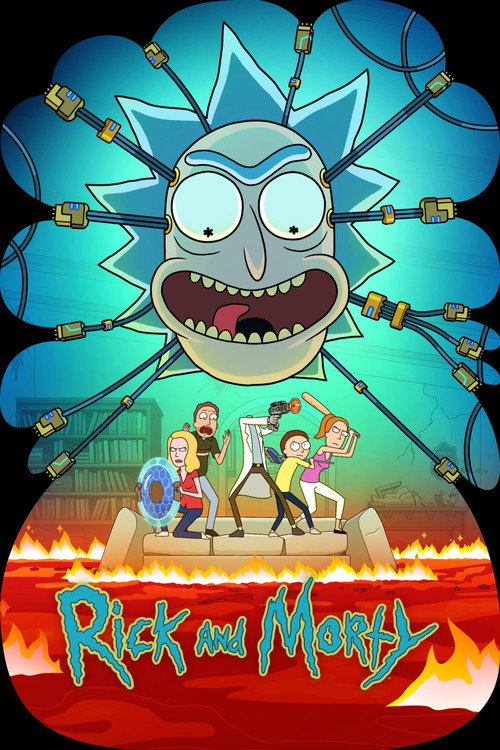
The series thrives on the volatile dynamic between Rick Sanchez, a sociopathic genius scientist, and his grandson Morty, whose timid nature serves as the perfect foil for interdimensional chaos. By tethering grand, universe-spanning adventures to the mundane squabbles of a suburban household, the show highlights how trivial human concerns appear against the backdrop of infinite timelines.
What genuinely works is the show’s ability to pivot from slapstick alien encounters to genuine emotional stakes without losing its cynical edge. While many praise the intricate time travel mechanics, the real strength lies in the domestic fallout; the show is at its best when Rick’s alcoholism and disregard for life directly conflict with the Smith family’s desperate need for stability.
Performance and Sonic Identity
The voice work, particularly by Ian Cardoni and Harry Belden, captures the frantic, often desperate energy required to make these characters feel grounded despite the absurd settings. Chris Parnell and Sarah Chalke provide a necessary anchor as Jerry and Beth, representing the grounded, often pathetic reality that Rick constantly tries to escape.
Ryan Elder’s score is an underrated element that ties the disparate tones together, utilizing synth-heavy motifs that feel both retro and alien. Where the production occasionally falls short is in its reliance on shock value, which can sometimes overshadow the clever thematic exploration of what it means to be a dysfunctional family in a vast, uncaring multiverse.
The Target Audience for Interdimensional Chaos
Those who enjoy adult animation that prioritizes intellectual rigor and dark comedy over sentimental tropes will find much to admire here. The series demands a viewer who can handle a protagonist who is often the villain of his own story, as Rick’s intelligence is consistently weaponized against his own kin.
Conversely, viewers who prefer their science fiction to offer a moral compass or clear heroic archetypes should skip this. The show’s refusal to provide easy answers or traditional character growth is its defining feature, which can feel repetitive or even exhausting for those who prefer more optimistic storytelling.
Rick and Morty: Ending Explained
(Spoilers ahead) The inherent tragedy of the series is that for all the time travel and alien exploration, the characters remain trapped in the same patterns of dysfunction. Rick’s genius is his ultimate prison; by viewing the universe as a series of equations and disposable realities, he ensures he can never truly connect with his grandson or his family.
The core takeaway is that science may make sense, but the human heart—or the lack thereof—remains the series’ only unsolvable variable. The cycle of the mad scientist dragging his grandson into danger is not a path to growth, but a desperate loop meant to distract from the emptiness of an existence where every choice is ultimately meaningless.