Dune: Prophecy is a Worthy Addition for Those Who Crave Palace Intrigue
Dune: Prophecy distills an intriguing take on the ramifications of power and sisterhood from the larger mythology and provides an entertaining, if mildly uneven, film experience. On the small screen, it won’t compare to the recent mega-films in terms of scale, but in the vein of a political drama, it offers a fulfilling journey focusing on characters.
The Weight of Legacy and Performance
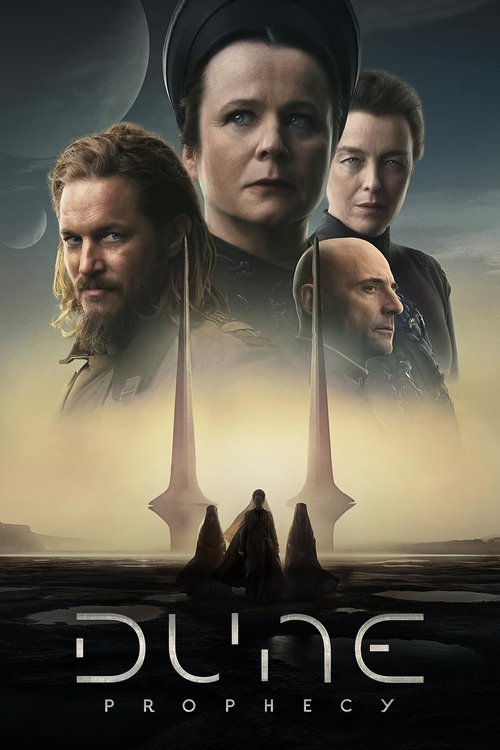
At the heart of this prequel are Emily Watson and Olivia Williams, bringing nuance to the Harkonnen sisters. Their connection is what anchors the series and gives a human element to the more conceptual sci-fi elements, as their struggle is to influence, survive, and ultimately control, which is at the center of most powerful rivalries.
Despite visually stunning design, the show struggles to blend the size of the sci-fi universe it seeks to create with the size of the human conflict that drives it. While the performances aren’t wanting, the script restricts them to focus more on complex machinations, high cat-and-mouse games, and intrigues that ultimately leave a lot of viewers of this series, already accustomed to blockbusters, wanting more in terms of action and sci-fi.
A Shift in Scale and Tone
The decision to narrow the scope of the story and shift to a more bureaucratic style of storytelling is a marked contrast to the broad strokes and epic scenery of the source material. By zeroing in on the embryonic stages of the Bene Gesserit, the show invites a different kind of engagement. Instead of massive battles and the sweep of war across the planet, the show encourages the viewer to look for the workings of a court as a framework for interpreting the dramas of the story.
Some have noted the absence of a closer look at the inner workings and the technical details of the universe such as the Butlerian Jihad. Some have viewed the show as a character drama with mystery elements as opposed to a SciFi show centered around an epic and sweeping mystery of planetary proportions.
Verdict for the Discerning Viewer
This show is not recommended for viewers who prefer exploring worlds characterized by a sense of wonder, wonderment, and whimsy. Instead, you will find sharp, intricate, layered dialogue and strong performances by the principal actors who portray intricate characters with depth. This series successfully takes a character-based approach to story-telling, as it explores politics and power struggle in a setting that could be construed as space-opera.
Viewers interested in extensive lore that aligns with the spirit and essence of the books (as opposed to narrative Verisimilitude), large, fast-paced, Sci-fi battles might want more from the series. The show is for those who prefer a trade thescale of the desert for the claustrophobic intensity of the throne room.