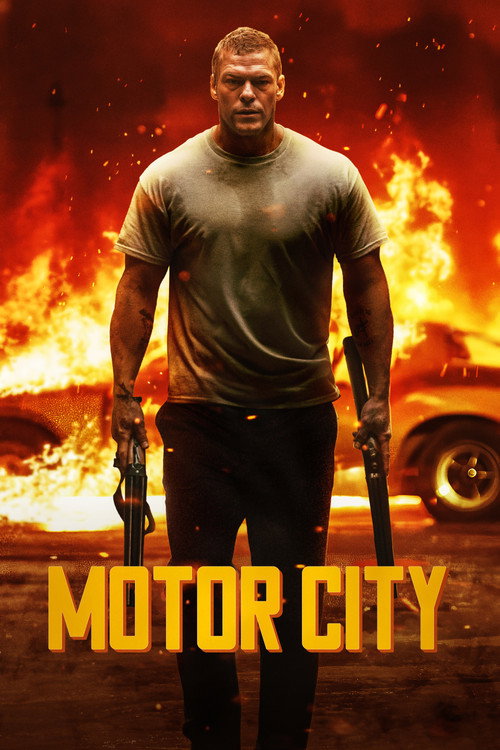
Motor City (2026) is a Visceral Experiment Worth Your Time
Motor City is like watching vengeance in motion. Despite its minor issues with narration, Motor City is a unique experience that, for the large part, illustrates its ideas and themes through cinematography, sound, and motion. While there’s a relatively shallow plot, those who prefer more cinematic stories to narratives will enjoy what’s on display.
The Power of Silent Velocity
Potsy Ponciroli casts the settings and background of Detroit’s 1970s in a very unique way. He relies not just on John Matysiak’s brilliant cinematography that picks up the roughness of the era, but most of the times relies on nothing. With an almost script-less script, he uses Alan Ritchson’s physicality to ground the film in the character’s emotional journey. This focuses on the character’s incarceration and his emotional imprisonment as well. The minimalistic approach to dialogue pays off for Ponciroli, as the audience is forced to figure out the emotional journey of the characters through body language and movement. This method does not work for everyone. Although some critics say that telling a story this way brings the storytelling to a dead end, the poetic cinematography and shots bring originality to a typically overdone genre of crime stories.
Sonic Landscapes and Structural Flaws
Steve Jablonsky’s soundtrack helps the momentum of the film. The music is vital to set the mood. During rhythmic scenes, Jablonsky’s music transforms routine action scenes to choreographed scenes that lean more towards violence and longing. Ballet dancers wait in anticipation for their cue to dance. Jablonsky’s music brings that same anticipation to action scenes.
However, Jablonsky’s music helps to cover for the weak storyline. A reliance on good music to supplement a plot tends to show a shallow story. Motivation for the background characters is even weaker in comparison to the main characters. Although there are plenty of dialogues, the pace of the story tends to drop. To add to the uneven pace in Act 2, background characters are sacrificed to extend the hi-energy action scenes.
Who Should Engage With This Ride
If you like movies that can immerse you with sensory detail (like the best action movies of the silent era) then you will probably enjoy this. It is perfect for people who don’t like movies that waste time with long explanations and instead focus and trust their audience with lighting, composition and sound to tell the story.
People who enjoy movies that have lots of dense dialogue, lots of layered political plots, and conventional movie plot structures will like this even less. If you feel like a movie needs to justify its emotional journey with obvious narration, then this visual purity will feel like a shallow movie style choice.
Motor City: Ending Explained
(Spoilers ahead) Though there are several meanings to the ending of the film, the the most important one is how the protagonist is hunting the final remnant of his sanity, representing the futility of revenge. Finally, John Miller’s final confrontation occurs after the film has stripped the audience of any excuses and left only the howl of a violent vacuum which in no way brings the audience closure.
Finally, the film shows that the main character’s obsession leaves him punished by never letting him regain the life he lost, nor the love of the woman he once had. He is now a ghost of the city he once fought to reclaim.