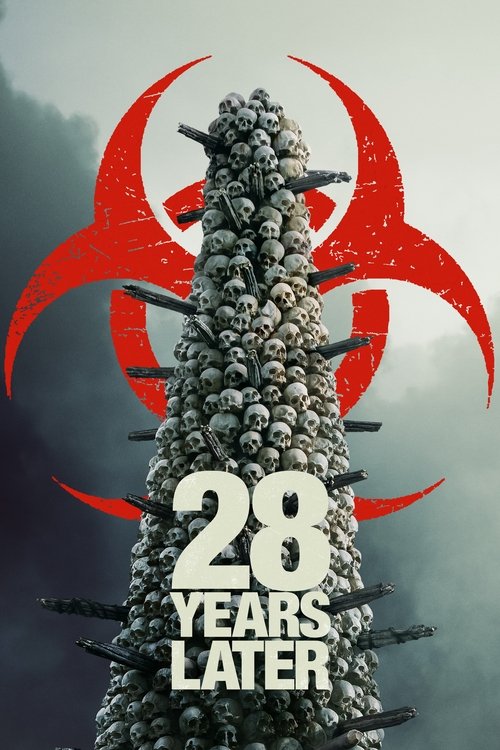
28 Years Later: A Bleak Evolution of the Rage Virus
28 Years Later (2025) is a worthwhile addition to the survival horror genre for those who are willing to psychological decay over standard zombie tropes. It succeeds as a tense, atmospheric thriller that prioritizes the rot of human morality over the spectacle of the infected.
The Weight of Isolation
The film establishes a compelling dichotomy between the protected island and the mainland, which has become a breeding ground for both the mutated Rage virus and extremist belief systems. Jodie Comer’s performance as Isla grounds the narrative, as her journey across the causeway serves as the catalyst for uncovering how the collapse of society has birthed bizarre, ritualistic behaviors among the remaining humans.
While the cinematography by Anthony Dod Mantle effectively captures the claustrophobic dread of a reclaimed England, the pacing occasionally falters in the second act. The shift from survival horror to a focus on the occult elements feels jarring, as if the script is trying to balance two different films rather than integrating them into a cohesive whole.
Cults and Human Mutation
What sets this entry apart is its refusal to rely solely on the infected as the primary antagonist. The introduction of a satanic cult led by Ralph Fiennes’ Dr. Ian Kelson suggests that the true horror is not the virus itself, but the desperate, twisted ways people attempt to rationalize a world that has ended. This thematic pivot is bold, though it arguably sidelines the infected, making the creatures feel like mere background dressing for a human drama.
If you enjoy science fiction that explores the sociological impacts of long-term catastrophe, this film is for you. Conversely, if you are looking for a traditional, fast-paced zombie film focused on relentless action and clear-cut survival, you will likely find the heavy focus on cult dynamics and existential dread frustratingly slow.
The Sound of Desolation
Alloysious Massaquoi’s score is a standout component, utilizing discordant, industrial tones that mirror the crumbling infrastructure of the mainland. The sound design complements the visual grit, creating an environment that feels genuinely hostile rather than just dangerous. It is rare to see a sequel lean so far into nihilism, and the commitment to this tone is what keeps the 115-minute runtime from feeling aimless.
However, the character arcs for Aaron Taylor-Johnson’s Jamie and Jack O’Connell’s Jimmy Crystal are somewhat underdeveloped. They serve as reliable foils for the protagonists, yet their motivations often feel secondary to the film’s broader, more abstract commentary on societal collapse. The film is at its best when it focuses on the internal struggle of its lead, rather than the secondary characters who occasionally feel like plot devices.
28 Years Later: Ending Explained
(Spoilers ahead) The ending of 28 Years Later delivers that the Rage virus was never the final threat, but merely a tool used by figures like Dr. Ian Kelson to reset the moral compass of humanity. By framing the survival of the island as a fragile, artificial construct, the film posits that the “dark heart” of the mainland is not just a place of infection, but a mirror of our own capacity for regression. The ending implies that the cult’s rituals were a desperate attempt to find meaning in a world that had moved beyond the need for human civilization, leaving the survivors trapped in a cycle where the virus is simply the beginning of a much longer, more sinister transformation.