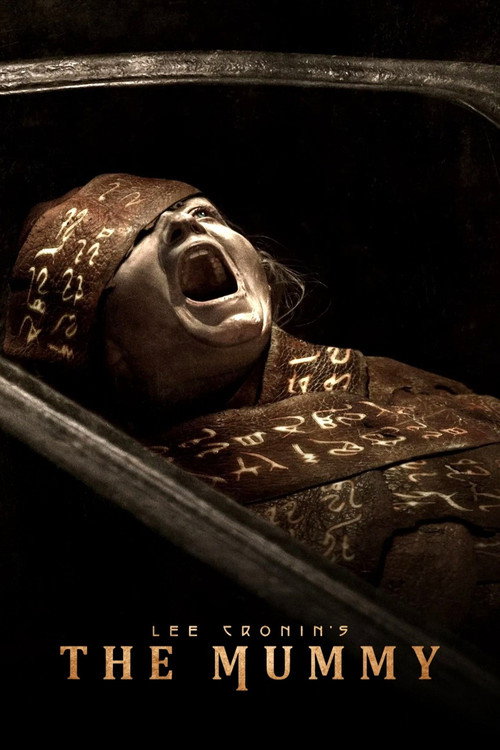
Lee Cronin’s The Mummy (2026) is a haunting, uneven mystery worth watching for its atmosphere
Lee Cronin’s The Mummy is a grim, effective horror-mystery that succeeds as a slow-burn character study despite a bloated runtime that threatens to sap its tension. It is a worthwhile experience for those who prefer psychological dread over jump scares, though casual viewers may find the pacing difficult to endure.
A Fractured Family Dynamic
The film centers on Charlie and Larissa Cannon, whose lives are shattered when their daughter, Katie, vanishes in Egypt. Eight years later, her sudden return acts as the catalyst for the horror, transforming a story of grief into a claustrophobic nightmare. Jack Reynor and Laia Costa deliver grounded, raw performances that anchor the supernatural elements in genuine human pain.
Where the film truly shines is in its refusal to offer easy comfort to the parents. The dynamic between the couple, now estranged by the trauma of the kidnapping, feels authentic and adds a layer of domestic tension that heightens the later supernatural reveals. It is refreshing to see a horror film treat the psychological fallout of loss with as much gravity as the monster itself.
Visual Dread and Ritualistic Pacing
Cinematographer Dave Garbett crafts a visual language that feels oppressive, utilizing the vast, indifferent desert landscapes to emphasize the family’s isolation. Stephen McKeon’s score avoids the typical bombast of creature features, opting instead for discordant, rhythmic textures that mirror the ancient rituals hinted at during the investigation. The aesthetic choices elevate the film from a standard kidnapping thriller into something far more esoteric.
However, the middle act suffers from repetitive investigative beats involving Detective Dalia Zaki. While May Calamawy is a compelling presence, the procedural elements often feel disconnected from the central horror, dragging the film toward its two-hour-plus runtime. The mystery would have been tighter had the investigation been trimmed to emphasize the family’s internal decay rather than the procedural legwork.
Target Audience and Final Thoughts
This film is tailor-made for fans of slow-burn supernatural horror who enjoy dissecting the intersection of ancient mythology and modern trauma. If you are looking for a fast-paced creature feature with constant action, you should skip this; the “monster” remains peripheral for much of the duration, appearing more as a lingering shadow than a physical threat.
Those who appreciate films like The Babadook or The Witch will likely find the most value here, as it prioritizes tone and dread over spectacle. It is a challenging, occasionally frustrating piece of work that earns its keep through sheer commitment to its grim, hopeless atmosphere. It is not a perfect film, but it is a singular, unsettling vision that lingers.
Lee Cronin’s The Mummy: Ending Explained
(Spoilers ahead) The return of Katie is not a rescue, but a vessel for something ancient, suggesting that the pyramid and the desert were not just locations of a kidnapping, but a site of a ritualistic exchange. The film posits that the “monster” is not a physical entity to be fought, but a cycle of grief that the family has inadvertently invited back into their home. By the final frame, the realization that Katie is a conduit for this supernatural force serves as a nihilistic conclusion, suggesting that some things lost to the desert are never meant to be recovered.