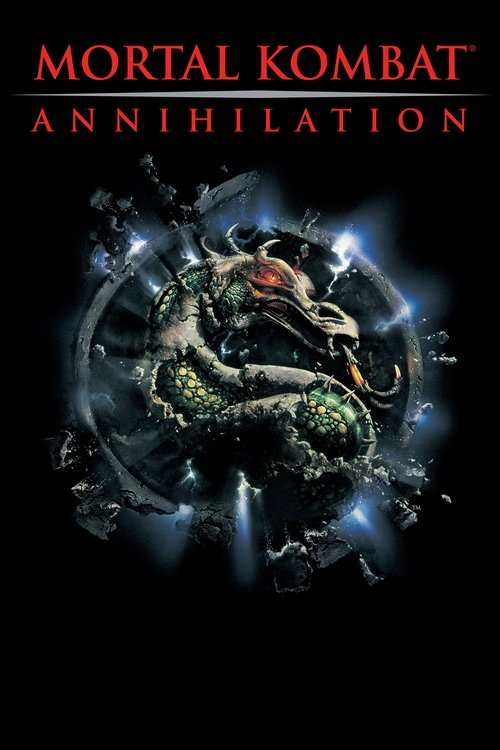
Mortal Kombat: Annihilation is a jagged, neon-soaked relic for genre completionists
Mortal Kombat: Annihilation is a frantic, uneven exercise in fantasy-action that delivers as a fascinating curiosity for those who value spectacle over narrative cohesion. It remains a worthwhile watch only for dedicated followers of the franchise who can appreciate its commitment to pure, unadulterated absurdity.
A relentless pace of martial arts chaos
The film thrusts Liu Kang, Kitana, and their allies into a six-day countdown to prevent Shao Kahn from merging Earth with his own dimension. The action sequences are frequent and aim for a high-concept aesthetic, utilizing magic and martial arts to bridge the gap between sci-fi and fantasy. There is a palpable effort to pack every frame with visual incident, which keeps the energy high even when the plot logic begins to fray.
Where the film succeeds is in its dedication to the source material’s over-the-top tone, refusing to ground its fantastical elements in anything resembling reality. However, it falls short in its pacing; the rapid-fire transitions between battle locations often make the stakes feel disconnected. While many critics lament the lack of character development, I argue that the film’s greatest weakness is actually its over-reliance on digital effects that have not aged gracefully, distracting from the physical performances of Shou and Soto.
The clash of gods and mortals
James Remar’s take on Raiden provides a necessary anchor, bringing a grounded, weary authority to a role that could easily have devolved into camp. His interactions with the other warriors offer the only moments of genuine gravitas, contrasting sharply with Brian Thompson’s Shao Kahn. Thompson portrays the villain with a booming, theatrical menace that fits the film’s heightened reality perfectly, even if his dialogue is frequently buried under the weight of the production’s ambitious sound design.
This film is best suited for viewers who enjoy 1990s-era fantasy experiments and have a high tolerance for disjointed storytelling. If you prioritize nuanced scripts or realistic fight choreography, you should skip this entirely. It is a film that demands you abandon all expectations of narrative structure in favor of a constant, loud, and colorful barrage of otherworldly conflict.
Visual ambition and auditory intensity
Matthew F. Leonetti’s cinematography leans heavily into saturated colors and high-contrast lighting, which effectively sells the idea of an alternate dimension bleeding into our own. George S. Clinton’s score acts as the heartbeat of the production, providing a driving, percussive backdrop that elevates the intensity of the martial arts encounters. These technical choices compensate for the limitations of the era’s visual effects by creating a distinct, unified visual identity.
While the visual style is bold, the film’s reliance on constant transformation and magical shifts can feel repetitive by the final act. The decision to prioritize spectacle over character arcs is a double-edged sword; it creates a lean, kinetic experience, but it leaves the audience with little emotional investment in the outcome. Ultimately, the film functions less as a coherent story and more as a series of stylized vignettes tied together by a singular, persistent threat.
Mortal Kombat: Annihilation: Ending Explained
(Spoilers ahead) The conclusion of the film serves as a definitive statement on the theme of authority versus individual willpower. As the warriors confront Shao Kahn, the final battle signifies the rejection of the warlord’s attempt to enforce a singular, oppressive order upon Earth. By overcoming the ultimate challenge, the heroes prove that even in a world governed by magic and alternate dimensions, the human element remains the deciding factor in survival.
The resolution reveals that the protection of the planet is not merely about physical strength, but about the ability to adapt to the chaos of the unknown. The defeat of the villain acts as a reset for the world, symbolizing the end of the threat of forced transformation. It is a blunt, satisfying finale that reinforces the idea that the cost of saving the world is the complete dismantling of the status quo.