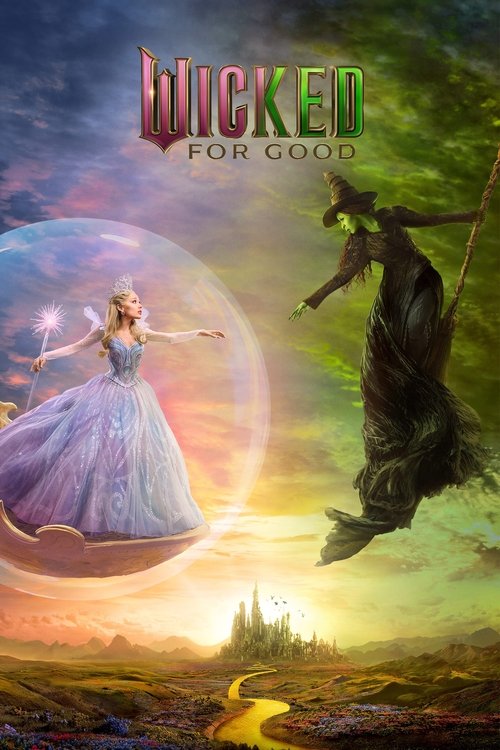
Wicked: For Good (2025) is a visually lavish conclusion that prioritizes emotional stakes over narrative pacing
Wicked: For Good is a worthwhile experience for movie fans of the source material who crave a deeper exploration of the central female friendship, though its sprawling runtime occasionally dilutes the urgency of its fantasy adventure. It succeeds as a character study of empathy, even when the plot occasionally stumbles under the weight of its own spectacle.
A Shift Toward Intimate Character Dynamics
The film excels when it focuses on the tension between Elphaba and Glinda, grounding the high-stakes fantasy in a tangible, messy friendship. Cynthia Erivo and Ariana Grande bring a necessary vulnerability to their roles, effectively portraying how two people with conflicting worldviews can find common ground through shared trauma and mutual understanding.
Where the film occasionally falters is in its handling of the political intrigue involving the Wizard and Madame Morrible. While Jeff Goldblum and Michelle Yeoh provide gravitas, their roles feel somewhat detached from the emotional core of the film, making the transition from personal drama to grand-scale adventure feel abrupt rather than earned.
Visual Spectacle and Musical Integration
Alice Brooks’ cinematography captures the vibrant, often chaotic nature of Oz with a sharp eye for color and texture that keeps the viewer engaged during the film’s 137-minute runtime. John Powell’s score weaves the musical elements into the narrative tapestry, ensuring that the songs feel like extensions of the characters’ internal monologues rather than mere interruptions.
Contrary to the common expectation that this sequel would focus heavily on the mechanics of the “Wicked” legend, the film chooses to demystify the magic in favor of exploring the cost of leadership. This choice might alienate those looking for a traditional high-fantasy battle, but it rewards viewers who prefer a character-driven approach to the established lore.
The Disconnect Between Scale and Substance
The film is best suited for those who appreciate musicals that prioritize character development and thematic depth over rapid-fire action sequences. If you are seeking a fast-paced adventure that prioritizes world-building and lore-heavy exposition, you might find the deliberate pacing of this sequel to be a frustrating hurdle.
To the conclusion, the film succeeds most when it stops trying to explain the mechanics of the world and starts focusing on the reconciliation between its two leads. It is a bold, if occasionally uneven, attempt to reframe a well-known story through the lens of radical empathy and the necessity of choosing one’s own destiny.