Chhaava (2025) is a Visceral Historical Drama Worth the Time
Chhaava is a compelling historical drama that succeeds by anchoring its massive scale in the fierce, personal rivalry between Chhatrapati Sambhaji Maharaj and Aurangzeb. It is defiantly a worthwhile watch for those who appreciate character-driven conflict, though its significant runtime demands a patient viewer.
A Clash of Wills and Ideology
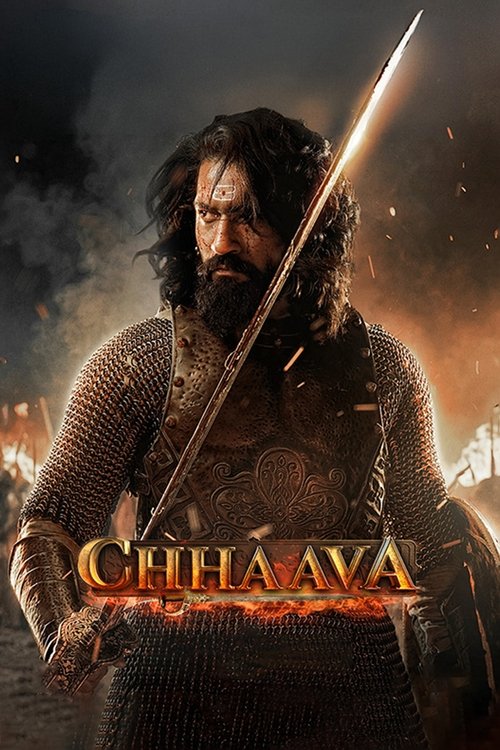
The film effectively captures the precarious political vacuum left by Shivaji’s passing and the subsequent escalation of the Maratha-Mughal conflict. Vicky Kaushal portrays Sambhaji not merely as a warrior, but as a leader burdened by the immense legacy of his father while navigating internal court intrigue. His performance provides a necessary human pulse to the sweeping historical narrative, making the high-stakes tactical decisions feel deeply personal.
Akshaye Khanna’s depiction of Aurangzeb serves as a chilling, calculated foil to this intensity. Rather than playing the villain as a one-dimensional figure, the script allows him to embody the cold, expansive ambition of an empire in its prime. The tension between these two leads carries the film through its quieter moments, proving that the drama is often more potent than the spectacle.
Visual Scale and Auditory Weight
Saurabh Goswami’s cinematography brings a gritty, tactile quality to the 17th-century setting, avoiding the sanitized look often found in period epics. The battle sequences are framed with a focus on the chaos and physical toll of combat, reflecting the desperation of the Maratha resistance. When combined with A.R. Rahman’s score, which emphasizes low-frequency dread and stirring orchestral swells, the film achieves a distinct atmospheric presence.
However, the pacing occasionally falters under the weight of its 161-minute runtime. Some of the political maneuvering in the court of Rajmata Soyarabai Bhosale feels repetitive, slowing the momentum built by the earlier action sequences. While these scenes are essential for historical context, they could have been tightened to allow the film’s central conflict more room to breathe during the final act.
Navigating the Historical Landscape
Where the film diverges from mainstream expectations is in its refusal to simplify the internal politics of the Maratha court. Instead of presenting a unified front, the story highlights the fragility of power and the betrayals that complicate Sambhaji’s mission. This nuanced look at the cost of leadership is refreshing, even if it occasionally makes the narrative difficult to follow for those unfamiliar with the specific 17th-century power dynamics.
The secondary cast, including Rashmika Mandanna as Yesubai Bhonsale and Ashutosh Rana as Sarlashkar Hambirrao Mohite, provides essential emotional grounding. Their roles serve as reminders that the war is not just a series of military engagements, but a struggle that tears families and loyalties apart. It is this focus on the human cost that elevates the film beyond a standard historical biography.
Is This Epic for You?
If you are a fan of historical dramas that prioritize character psychology over mere pyrotechnics, Chhaava will reward your attention. It is particularly suited for viewers who enjoy slow-burn political tension paired with high-stakes action. The commitment to a serious, grounded tone makes it a substantial viewing experience that respects the complexity of its source material.
On the contrary, those seeking a fast-paced, lean action film should likely skip this title. The 161-minute duration and the heavy reliance on courtly dialogue may feel tedious to audiences expecting a non-stop barrage of combat. If you prefer your history told with brevity and constant momentum, the deliberate, methodical pace here might prove frustrating.