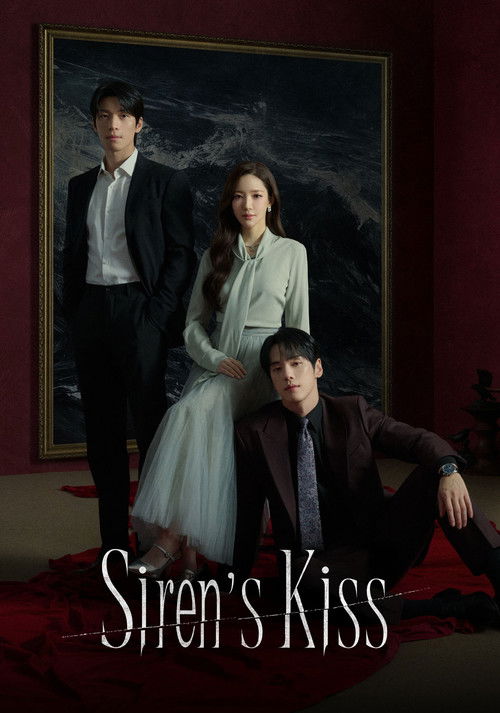
Siren’s Kiss (2026) is a polished, if predictable, insurance thriller
Siren’s Kiss functions as a stylish exercise in atmospheric tension, though it frequently sacrifices narrative logic for the sake of its central melodrama. While it succeeds as a moody, character-driven mystery, its reliance on familiar genre tropes prevents it from becoming truly essential viewing.
The mechanics of obsession
The series thrives on the interplay between Park Min-young’s enigmatic Han Seol-ah and Wi Ha-jun’s driven investigator, Cha Woo-seok. Their chemistry provides a necessary anchor, grounding the investigation into insurance fraud within a framework of high-stakes romantic suspicion. The visual language of the art auction house serves as a sharp, cold contrast to the grittier reality of the insurance industry, creating a distinct aesthetic duality.
However, the show often leans too heavily into the ‘pathetic’ melodrama inherent in its premise. By prioritizing the allure of the femme fatale archetype over a rigorous procedural structure, the pacing occasionally stalls. The mystery, while engaging, suffers from a lack of genuine innovation in its investigative beats.
Genre friction and structural flaws
Where the series diverges from the expected path is in its refusal to fully commit to either the thriller or the romance genre. This creates a fascinating, if sometimes jarring, friction that keeps the viewer guessing about the protagonist’s true motives. The supporting cast adds enough texture to the fraud investigation to keep the plot moving, even when the central mystery feels overly reliant on coincidence.
Viewers who appreciate slow-burn character studies will find much to admire in the nuanced performances of the lead duo. Conversely, those seeking a tight, plot-heavy mystery may find the constant shifts into melodrama frustrating. The show is best suited for an audience that prefers style and character dynamics over intricate forensic puzzles.
Siren’s Kiss: Ending Explained
(Spoilers ahead) The show’s ending really shows how greed can ruin people, making the point that in the world of big-money insurance fraud, nobody walks away with clean hands. By framing Han Seol-ah as both a potential perpetrator and a victim of her own circumstances, the finale forces the audience to confront the ambiguity of the justice system. Ultimately, the resolution implies that truth is a secondary concern in a landscape defined by financial manipulation and personal betrayal.