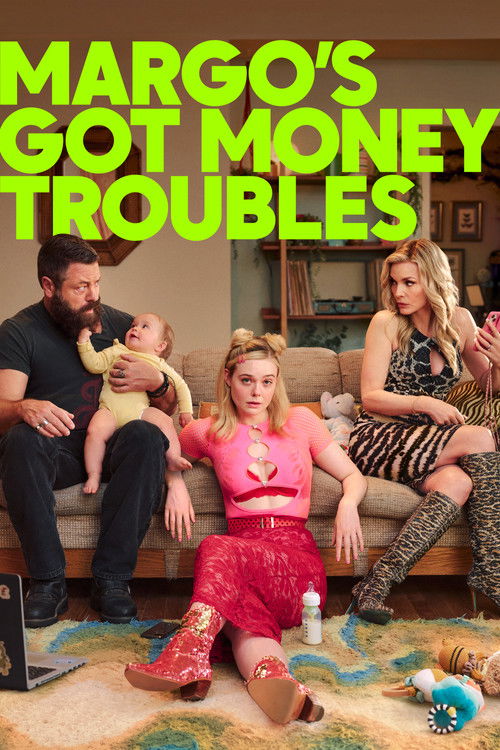
Margo’s Got Money Troubles is a sharp, uneven look at modern survival
Margo’s Got Money Troubles (2026) is a worthwhile watch into the absurdity of modern financial desperation, anchored by a vibrant cast that keeps the comedy grounded despite a occasionally frantic narrative pace. It succeeds as a character-driven drama for those who appreciate stories about unconventional family dynamics and the messy reality of adulthood.
A Balancing Act of Grit and Absurdity
The premise thrives on the bizarre collision between Margo’s mundane struggle as a broke, single mother and the theatrical world of professional wrestling. Elle Fanning portrays Margo with a weary, relatable cynicism that keeps the series from veering into pure farce, even when the plot pushes her into increasingly desperate side hustles. The inclusion of her father, a former pro wrestler played by Nick Offerman, provides a necessary bridge between the show’s grounded financial stakes and its more colorful, performative elements.
Where the show occasionally falters is in its attempt to balance these disparate tones. While the comedy lands during scenes of domestic chaos, the dramatic beats concerning Margo’s college dropout status can feel slightly rushed. Some viewers might find the transition from heartfelt mother-daughter moments with Michelle Pfeiffer’s Shyanne to the high-energy wrestling subplots jarring, yet this friction is exactly what gives the series its distinct, jittery rhythm.
The Strength of the Ensemble
The chemistry between the leads is the primary reason to stick with the series through its more meandering middle episodes. Michelle Pfeiffer brings a nuanced, lived-in quality to Shyanne that elevates the material beyond a simple comedy of errors, while Greg Kinnear’s Kenny adds a layer of unpredictable energy to the supporting cast. Thaddea Graham provides a sharp, necessary foil to Margo’s internal monologues, ensuring that the dialogue remains biting rather than merely sentimental.
Contrary to the common assumption that this is just another quirky comedy about financial hardship, the show is actually a surprisingly grim exploration of the gig economy. It refuses to offer easy solutions for Margo, which might frustrate viewers looking for a tidy resolution to her mounting bills. If you prefer your dramedies to have a bit of teeth and a refusal to coddle the protagonist, you will find much to admire here.
Atmosphere and Sonic Identity
Nathan Micay’s score is instrumental in defining the show’s unique voice, utilizing a soundscape that feels as unpredictable as Margo’s career trajectory. The music avoids the typical, jaunty cues one might expect from a series centered on a single mother’s struggles, opting instead for something more atmospheric and slightly off-kilter. This choice reinforces the feeling that Margo is constantly operating on the edge of a breakdown, making the stakes feel personal rather than purely situational.
This series is ideally suitable for fans of character-focused narratives who enjoy a mix of sharp wit and genuine, low-stakes tension. Those who demand a fast-moving, plot-heavy thriller should look elsewhere, as the show is far more interested in the quiet, agonizing moments of Margo’s daily life than in explosive plot twists. It is a series that rewards patience, favoring the slow burn of personal growth over the quick payoff of a traditional sitcom structure.