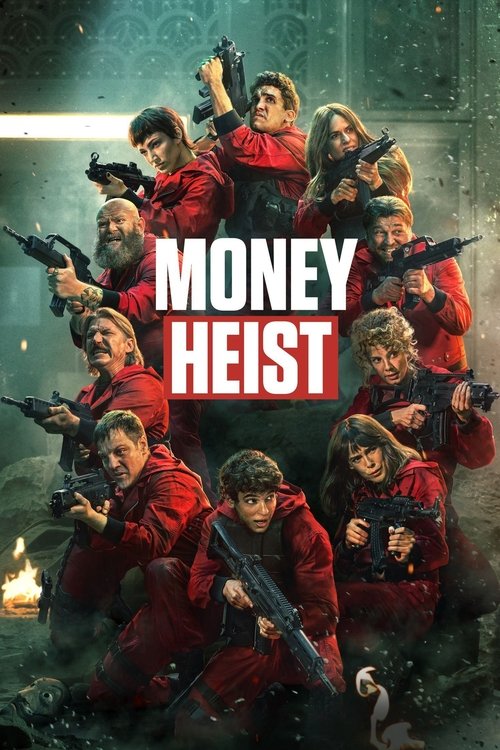
Money Heist is a Tense, Flawed Exercise in High-Stakes Strategy
Money Heist is a gripping crime drama that succeeds as a stylish puzzle box of strategy, though it frequently sacrifices internal logic for the sake of heightened emotional melodrama. It is a worthwhile watch for viewers who enjoy complex, plan-heavy narratives, provided they are willing to overlook the recurring lapses in character discipline.
A Calculated Game of Chess
The premise of the 2017 series, centered on the Professor’s meticulous blueprint for infiltrating the National Coinage and Stamp Factory, creates a compelling rhythm. By focusing on the eleven-day occupation, the show effectively blends the claustrophobia of a hostage drama with the intricate plotting of a classic heist. The Professor acts as the narrative anchor, and his ability to anticipate police maneuvers provides the series with its most satisfying intellectual payoffs.
However, the show often undermines its own premise of a “perfect robbery” by allowing the personal volatility of the crew to derail the plan. While the flashbacks to their months of seclusion are intended to show professional preparation, they often function merely as a device to inject soap-opera-style sexual tension into the high-stakes environment. The contrast between the cold, clinical planning and the messy, impulsive behavior of the robbers provides a strange, uneven viewing experience.
The Anatomy of a Volatile Crew
The strength of the ensemble lies in the distinct archetypes portrayed by the cast, particularly Pedro Alonso’s Berlín and Úrsula Corberó’s Tokio. Berlín brings a necessary, chilling charisma to the leadership role inside the factory, while Tokio’s role as the narrator highlights the impulsive nature that defines the group. Their interactions are the engine of the drama, grounding the abstract concepts of the heist in human stakes.
I find the mainstream focus on the “romantic” chemistry between the characters to be a distraction from the show’s actual narrative potential. Where the series truly shines is in the cat-and-mouse dynamic between the Professor and Raquel Murillo, which operates as a genuine psychological battle. When the writing leans into this intellectual rivalry rather than the interpersonal squabbles of the robbers, the show achieves a level of tension that is far more impressive than its romantic subplots.
Who Should Tune In
This series is ideal for viewers who appreciate elaborate, multi-layered crime dramas where the outcome of every move is debated in real-time. If you enjoy watching a protagonist manage a dozen moving parts under extreme duress, the tactical maneuvers executed by the Professor will keep you engaged throughout the eleven-day siege. It is a show built for binge-watching, as the cliffhanger structure is designed to pull the audience through the narrative arc with relentless momentum.
Conversely, those who demand strict realism or characters who act with consistent, rational judgment should skip this title. The frequent reliance on Stockholm syndrome and sudden emotional breakdowns often feels like a shortcut to manufacturing drama rather than a natural extension of the plot. If you find yourself frustrated by characters who ignore clear instructions at the worst possible moments, the erratic decision-making of the crew will likely prove more irritating than entertaining.